
Where boxing can be bet on in New Zealand and what the odds actually say
 Available in US
Updated as of October 30, 2026 against the Department of Internal Affairs register and the Racing Industry Act 2020 framework.
New Zealand boxing betting runs through a single lawful channel. Since the Racing Industry Amendment Act 2025 inserted section 74AAA on 28 June 2025, TAB NZ and its online sister brand Betcha are the only operators permitted to take racing and sports bets from people in New Zealand. That single fact reshapes what boxing betting in New Zealand 2026 looks like in practice: the choice is not which bookmaker offers the deepest market, but whether to use the TAB NZ channel with its New Zealand harm-minimisation tools or to accept the offshore route and the absence of any local complaint path.
The page that follows works through what boxing betting actually involves in New Zealand this year: the bet types and how decimal odds translate into a return, the tournaments and weight classes the sport offers, the ten brands a New Zealand punter meets (TAB and Betcha lawfully, eight others on offshore licences with no New Zealand reach), the regulatory frame, responsible-gambling tools, how promotions actually cost what they cost, and where predictions and bankroll discipline fit. The aim is analysis the reader can act on, not a sales pitch for any brand.
How boxing odds and bet types work
Boxing is a sport of clean numerics, which is why it attracts beginners: one winner, one loser, occasionally a draw, and decimal odds that translate into a return with one multiplication. The depth comes from the market menu a bookmaker offers around each fight, not from the sport itself.
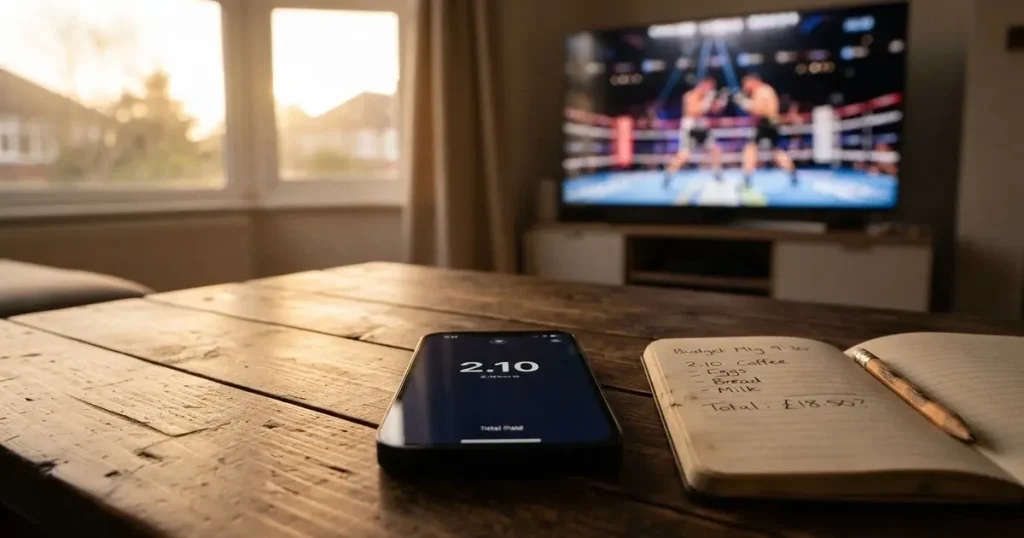
What a decimal price actually pays
A decimal odd is the total returned for every $1 staked, including the stake itself. At odds of $2.50, a winning $10 bet returns $25 — $15 net profit on top of the $10 risked. At odds of $1.50, a winning $10 bet returns $15 — $5 net profit. A price below $2.00 is a favourite; above $2.00 is an outsider. The lower the price on the favourite, the more the bookmaker expects that fighter to win.
The return formula holds for every boxing bet, every single-leg market. Stake multiplied by the decimal odds gives the gross return; subtract the stake for net profit. There is no commission, no deduction at settlement — the price is the price, and the bet is what it is.

Multi bets multiply the legs. A two-leg multi at $1.80 and $2.20 is priced at $3.96 (1.80 × 2.20). A winning $5 multi pays $19.80. Each leg must win for the multi to pay; one loss sinks the whole ticket. Same-game multis (SGMs) are multi bets whose legs all come from one fight — method of victory, total rounds, and the head-to-head winner all combined. SGMs carry higher margins than single markets and reward correlation that a singles bettor cannot otherwise capture.
The standard boxing market menu
A typical TAB NZ card for a world-title fight offers a menu that goes deeper than just picking the winner.
| Market | What it asks |
|---|---|
| Head-to-head | Which fighter wins the bout |
| Draw (exact outcome) | Bout ends in a draw after the judges’ scorecards |
| Method of victory | Win by KO, TKO, decision, or disqualification, sometimes broken into “in rounds 1–6 / 7–12” |
| Total rounds | Over or under a published line, often set at 8.5 or 9.5 rounds for a 12-round bout |
| Go the distance | Yes (decision) / No (any stoppage) |
| Round grouping | Fighter to win in rounds 1–3, 4–6, 7–9, 10–12 |
| To be knocked down | Yes / No for either fighter |
The rounds lines and method-of-victory splits let a punter bet on how a fight ends, not just who wins. A heavy favourite at $1.20 on the head-to-head may sit at $3.50 to win inside the distance, because stoppages are rarer than decisions at the elite level. That gap is the market expressing its view of the fight’s likely shape.
How fights actually end, and why it matters for the menu
Professional boxing bouts typically run ten to twelve rounds, with four-round fights common for newer fighters learning the craft. Each round lasts three minutes with a one-minute rest between rounds. A bout can end by knockout (a fighter unable to continue from a punch), technical knockout (the referee, doctor, or corner stops the fight), a decision on the judges’ scorecards after the scheduled rounds, or disqualification for fouls. A draw occurs when the judges’ scorecards show equal scores.
Those five outcomes feed the market. A “decision” verdict, after twelve rounds, is the most common ending for championship fights; a knockout is rarer and concentrated in the heavier divisions or when styles clash. Punters who study fight film and reach a view that a bout will go long can back the “go the distance / decision” market at a price that pays better than the head-to-head favourite, because the bookmaker prices stoppages in.
Draws are not a third favourite
The draw is genuinely rare at elite level. Judges can return equal scorecards; at most major fights in the last decade, the draw has been a single-digit-percentage outcome. TAB NZ prices it accordingly — often in the $15 to $40 range on a head-to-head card — but offers it as a standalone market rather than rolling the dead-heat risk into the head-to-head. Backing the draw on a hunch is a long-odds punt, not a hedging position. It is worth knowing the market exists; it is rarely worth staking real money on.
What the bookmaker keeps: margin and payout share
Every decimal price carries a margin the bookmaker takes on the market. The arithmetic is straightforward for a two-way market like the head-to-head: payout share equals one divided by the sum of the reciprocal odds on both outcomes; the margin is one minus the payout share.
For an illustrative two-way market priced at $1.90 on each fighter, the reciprocal of each price is approximately 0.5263, and the two reciprocals total roughly 1.0526. The payout share comes to about 95.0%, which leaves a margin of around 5.0% — that 5% is what the bookmaker keeps on every dollar bet on this market across both outcomes. A $100 wagered across both fighters returns about $95 in winnings on average; the remaining $5 is the bookmaker’s edge.
In real markets the two prices rarely sit at $1.90/$1.90 — one fighter will be favourite and the other outsider, and the margin is still computed across both outcomes. A market priced at $1.40 / $2.80 carries roughly the same 5.0% margin in total; the margin is the gap between 100% and what the two prices might sum to if they were perfect. Same-game multis and round-grouping markets typically carry higher margins, often 7% to 10%, because the correlations are harder for a casual bettor to price. Knowing the margin on a market tells the punter how much of every dollar is the bookmaker’s before a punch is thrown.
Boxing as a sport: weight classes, sanctioning bodies, and where the value sits
Boxing’s structure is unusual: four major sanctioning bodies each crown their own world champion, which means a single weight class can hold four “world” titleholders at once. That fragmentation is the single biggest difference between boxing and other combat sports a punter may bet on.
The four-bodies problem
The WBA, WBC, IBF, and WBO sanction world championships in professional boxing. A fighter who holds two or three belts is described as a unified champion; a fighter who holds all four is the undisputed champion. The sanctioning bodies also publish their own rankings and order mandatory title shots, which produces fights the sanctioning calendar guarantees regardless of public demand. For a bettor, the consequence is that “world champion” in boxing often means one belt out of four, and the unification fight that resolves the question is the marquee event of a division in any given year.
Where the value sits in the calendar
The boxing calendar runs year-round but concentrates marquee fights in two windows. The late-spring window, around May, is traditionally the biggest in the United States. The late-fall window, around November, is the second peak. Pay-per-view events in the heavyweight division and the marquee light-heavyweight, middleweight, welterweight and lightweight fights dominate the headline calendar. Punters looking for value away from the top of the card can look at regional titles and prospect-vs-veteran matchups, where bookmakers price fights less sharply and a knowledgeable fight watcher can find edges.
How long the fights actually go
Championship fights are scheduled for twelve rounds. Ten-round fights are common for non-title main events and eliminators. Eight-round fights are typical on undercards. The shorter the fight, the less time for a stoppage, and the more prominently the market prices “decision” outcomes. A bettor who notices a bookmaker pricing a six-round regional fight as if stoppages are common has spotted a market that has not adjusted for the schedule.
What TAB NZ’s terms cover
TAB NZ takes fixed-odds bets on boxing; its market list comes only from its own terms. The TAB NZ app covers horse and harness racing, rugby union, rugby league and other sports, pre-match and live, and includes Trackside live race streaming with in-app betting, racing form, Blackbook and Jockey Challenge tools, and a simplified wallet for deposits and withdrawals. Boxing appears in that “other sports” category as TAB NZ lists it, and the depth of the card depends on what fights the promoter and broadcaster bring to the New Zealand market. Betcha, the second TAB NZ brand, lists MMA/UFC alongside boxing in its sport menu. The depth of the boxing card on either brand depends on TAB NZ’s own commercial choices, and there is no requirement to carry a given event.
The New Zealand boxing betting landscape in 2026
The table below sets out the ten brands a New Zealand punter is likely to meet when looking for a place to bet on boxing in 2026. TAB NZ’s two brands appear first because they are the only ones lawfully permitted to take bets from people in New Zealand. The remaining eight are not licensed in New Zealand — they operate on overseas licences (most commonly Curaçao or Anjouan) that give no right to take bets from New Zealand residents, and they sit outside any New Zealand harm-minimisation or complaint framework. Each is reviewed on the same set of considerations, so a punter comparing different bookmakers is comparing them on equal criteria.
| Brand | New Zealand status | Boxing and bookmaker profile |
|---|---|---|
| TAB | TAB NZ brand | First released as a New Zealand app on 8 September 2014 under the seller name New Zealand Racing Board; covers racing and sports pre-match and live; deposit limits, time-outs and self-exclusion available |
| Betcha | TAB NZ brand | First released as a New Zealand app on 6 August 2024 by Entain New Zealand Limited; covers horse, greyhound and harness racing plus rugby, NRL, MMA/UFC, NBA, NFL, tennis, cricket, football, motorsports and esports |
| RTbet | Not licensed in New Zealand | Sportsbook covers football, tennis, table tennis, basketball, ice hockey, American football and baseball, with live betting and virtual sports; Curaçao licence |
| BigClash | Not licensed in New Zealand | Pre-match and live sports betting across international and local leagues, plus virtual sports and esports betting on FPS and MOBA titles; Curaçao licence 8048/JAZ |
| LegendPlay | Not licensed in New Zealand | Sports, Live Betting and Virtual Sports sections; lists football, tennis, basketball and ice hockey; Anjouan Gaming Authority licence |
| Alawin | Not licensed in New Zealand | Sportsbook covers football, tennis, table tennis, basketball, ice hockey, American football and baseball, plus Live Betting, Virtual Sports and esports |
| BillyBets | Not licensed in New Zealand | Casino and sportsbook under one account; covers football, tennis, table tennis, basketball, ice hockey, American football, baseball, combat sports, esports, virtual sports and live betting; cashback and reload bonuses on sports; coin shop for free bets and free spins; five-level VIP programme |
| Spinbara | Not licensed in New Zealand | First deposit bonus 100% up to EUR 100; sport crypto welcome bonus 100% up to 200 USDT; casino welcome bonus 100% up to EUR 500 plus 200 free spins |
| Rabona | Not licensed in New Zealand | Launched on 23 December 2019 as the sixth online sportsbook of the Soft2Bet group |
| Thunderpick | Not licensed in New Zealand | Esports-first, covering CS2, League of Legends, Dota 2 and Valorant; sportsbook offers a cash-out feature and markets from the Champions League to the NFL; Curaçao licence OGL/2024/677/0722, holder Paloma Media B.V. |
The two TAB NZ brands are the same operator under different names; they are never rivals, and the value comparison is with the channel as a whole, not between the two apps. Every other brand in the table is unlicensed in New Zealand. A punter who chooses an offshore brand is choosing it on its market depth, its price, or its promotions, not on any protection that follows from where the operator is licensed.
TAB NZ and Betcha — the lawful channel
TAB NZ, the trading name of the New Zealand Racing Board, is the only entity lawfully permitted to offer racing and sports betting to people in New Zealand under section 74AAA of the Racing Industry Act 2020, in force since 28 June 2025. TAB NZ’s partner Entain runs the TAB business under a 25-year agreement signed in 2023, which gives Entain a 50/50 share of gross profits, with at least $150 million a year going to TAB NZ for the first five years; Entain also pledged a one-off $100 million payment to the racing sector. The two online brands — TAB and Betcha — sit inside that partnership.
TAB and Betcha look like different products. TAB is the established New Zealand racing and sports app, first released on 8 September 2014 under the seller name New Zealand Racing Board; the app carries a 17+ App Store age rating while requiring customers to be 18 or over to bet. Betcha is newer — first released on 6 August 2024 by Entain New Zealand Limited — and is positioned as a sports-led app rather than the racing-led TAB. The card depth differs: Betcha lists MMA/UFC alongside boxing in its sport menu, and markets like NBA, NFL, NRL, cricket, football, motorsports and esports sit alongside racing.
For a boxing punter, the practical comparison between TAB and Betcha is interface and card depth rather than price: the odds engine and the markets are shared inside TAB NZ’s operation, and an exclusion set on one brand applies across both. A punter who bets mostly on boxing and wants a sports-led interface may prefer Betcha; a punter who wants racing and sports in one wallet may prefer TAB. Neither is a better deal in price terms, because they are the same bookmaker with two skins.
The deposit methods, withdrawal times, and minimum stake on either brand are TAB NZ’s own commercial choices. Account opening requires a verified New Zealand address and ID; the age requirement is 18. Harm-minimisation tools — deposit limits, time-outs, and self-exclusion — are listed in the apps and apply across both TAB NZ brands.
Offshore brands New Zealand punters meet
The remaining eight brands in the table are not licensed in New Zealand. Each operates under an overseas licence — most commonly Curaçao or Anjouan. The Department of Internal Affairs told providers serving New Zealand to withdraw with immediate effect when section 74AAA took effect on 28 June 2025, and no prosecution of an offshore bookmaker has been published, but the legal position remains that an overseas operator taking a sports or racing bet from a person in New Zealand is breaking New Zealand law.
The Department warns that overseas operators may be in jurisdictions with minimal consumer safeguards, may not return unspent credits, and may not pay out large wins. New Zealand law targets the operator, not the player — section 19(4) of the Gambling Act 2003 (inserted in 2025) says an individual may not be convicted for placing a bet with an offshore betting operator in breach of section 74AAA; no source states a penalty for a player. The honest framing is that TAB NZ and Betcha are the only lawful option with New Zealand harm-minimisation tools and regulator oversight; the offshore route is unlawful for the operator to serve New Zealand, has no New Zealand complaints route, and carries the risks the Department names.
What the offshore brands offer is choice in market depth, sport coverage, promotional structure, and product features. RTbet, BigClash, LegendPlay, Alawin, BillyBets, Spinbara, Rabona, and Thunderpick each list a different sportsbook configuration — some emphasise live betting, some virtual sports, some esports (Thunderpick is esports-first, covering CS2, League of Legends, Dota 2 and Valorant alongside its sportsbook). The boxing card depth varies. None of them is licensed in New Zealand, and none of them is recommended. The reviews that follow describe what each offers and which kind of punter it suits, without inviting a sign-up.
The legal frame for boxing betting in New Zealand
Boxing betting in New Zealand sits inside a specific regulatory architecture, and the architecture — not the marketing — explains what a punter can actually do.
The Racing Industry Act 2020 and section 74AAA
The Racing Industry Act 2020 establishes TAB NZ as the sole provider of racing and sports betting in New Zealand. The Racing Industry Amendment Act 2025 inserted section 74AAA, in force on 28 June 2025: no person other than TAB NZ may offer racing betting, sports betting, or other racing or sports betting to a person in New Zealand, regardless of where that person is resident or incorporated. The Department of Internal Affairs told unlicensed providers to withdraw with immediate effect, and the law puts liability on the offshore operator. There is no licence to apply for and no licence register for bookmakers, because there is only one lawful provider.
TAB NZ’s commercial partner is Entain, under a 25-year agreement signed in 2023 that gives Entain a 50/50 share of gross profits and at least $150 million a year to TAB NZ for the first five years. Entain also pledged a one-off $100 million payment to the racing sector. The partnership structure explains why TAB and Betcha sit inside one operator group: Betcha is the Entain-built sport-led app; TAB is the established New Zealand Racing Board product.
What may be bet on, and what counts as betting
TAB NZ takes fixed-odds and tote (pool) bets. Its published betting rules define bet types such as Win, Place, Each Way, Quinella, Exacta, Trifecta, First Four, Double, Treble, Daily Double, Running Double, Quaddie and Big6 — these are racing bet types — and Multis and Same Game Multis for sports. Boxing falls into the sports-betting category, and the depth of the card on any given fight is TAB NZ’s commercial choice. There is no statutory requirement to offer a specific fight, and there is no per-bet cap set in law; any limits are TAB NZ’s own terms.
Live betting is listed in the TAB NZ apps. No statutory restriction on in-play markets has been identified, so TAB NZ’s live boxing markets operate under its own terms. No lawful New Zealand betting exchange exists, and spread betting is outside TAB NZ’s sports-betting definition — so a punter who wants exchange-style betting or spread markets has no lawful New Zealand option at all. TAB NZ does not appear to offer bets on politics or novelty markets.
Greyhound racing is closing in stages from 1 August 2026, and from that date offshore operators may not take bets on greyhound races either. That change does not affect boxing, which remains under the broader sports-betting prohibition for anyone other than TAB NZ.
Age, identity, and account requirements
The age for TAB NZ betting is 18; betting under 18 is an offence under section 89 of the Racing Industry Act 2020. Land-based casinos are age 20 — the two age limits are not the same and never merge. TAB NZ accounts need a verified New Zealand address and ID; opening an account requires the punter to be a New Zealand resident with verifiable identity, which is how TAB NZ meets its anti-money-laundering obligations.
The Online Casino Gambling Act 2026
The Online Casino Gambling Act 2026 licenses online casino gambling only and does not license sports betting. TAB New Zealand winning the right to apply for a casino licence does not extend the betting monopoly. The casino law creates a separate register for online casino exclusion, which is not the same as a TAB NZ self-exclusion. Punters keep the two systems separate in their head — TAB NZ self-exclusion covers racing and sports at TAB and Betcha; the casino register is a different thing for online casino play.
Tax and the player
For the player, Inland Revenue guidance says recreational gambling winnings are generally not taxable, and prize money from TAB horse, dog and trotting races is not taxable. A punter who bets as a business is a different case — that is general information, not tax advice, and the punter consults Inland Revenue or an accountant if their betting is at a scale that resembles a business. For boxing betting specifically, recreational winnings fall under the general rule that gambling income is not taxable.
What the offshore brands face
An overseas bookmaker taking sports or racing bets from a person in New Zealand is breaking New Zealand law. The penalty for breaching section 74AAA is not stated in the section, and no prosecution of an offshore bookmaker has been published. New Zealand does not block bookmaker sites. The Department of Internal Affairs warns that overseas operators may be in jurisdictions with minimal consumer safeguards, may not return unspent credits, and may not pay out large wins. None of that makes offshore betting illegal for the player — section 19(4) of the Gambling Act 2003 (inserted in 2025) confirms that an individual may not be convicted for placing a bet with an offshore operator — but it does mean there is no New Zealand complaints route and no local harm-minimisation framework attached to an offshore account.
The point-of-consumption charge on offshore racing and sports bets ceased on 30 June 2026, which simplifies the tax position for the offshore operator side but does not change the legal status of taking bets from a New Zealand resident. Operator tax payment is not evidence of lawfulness — overseas operators supplying New Zealand residents pay online gambling duty (12% of profits since 1 July 2024, rising to 16% from 1 January 2027), but a duty being payable does not make an offer lawful.
Responsible gambling tools and where help is
Boxing betting, like any form of sports betting, sits inside a wider gambling-harm framework. The framework is real, the tools are real, and the choice to use them is the punter’s.
What TAB NZ offers
TAB NZ provides safer-gambling tools in its app: deposit limits, time-outs and self-exclusion. A deposit limit caps the amount a punter can deposit over a chosen window — daily, weekly, or monthly — and the limit applies across both TAB NZ brands. A time-out suspends the account for a chosen period. A self-exclusion is longer-term and is the strongest of the three; once set, it prevents the punter from opening a new account for the exclusion period. An exclusion set on TAB applies to Betcha as well, because both brands sit inside the TAB NZ group.
The TAB NZ apps also list the free Gambling Helpline on 0800 654 655, with a text line at 8006, and point to Safer Gambling Aotearoa for counselling and support. These are the practical entry points for a punter who feels the betting has stopped being recreational.
What offshore brands offer, and what they don’t
The offshore brands in the table each carry their own responsible-gambling language, but none of them sits inside a New Zealand harm-minimisation framework. A punter who self-excludes at an offshore brand has no New Zealand register to enforce that exclusion at a second offshore brand. The offshore operators named in this page operate under Curaçao or Anjouan licences, neither of which creates a complaints route a New Zealand resident can use in practice. The Department of Internal Affairs names the harm-minimisation gap as one of the specific risks of betting offshore.
The Problem Gambling Levy
TAB NZ pays a Problem Gambling Levy of 0.74% (in force from 1 July 2025 to 30 June 2028). The levy funds harm-minimisation and treatment services. For the punter, the existence of the levy is the visible sign that part of every TAB NZ bet goes back into the harm-prevention system; offshore operators do not contribute to that system, regardless of what their own responsible-gambling pages say.
When to reach out
The Gambling Helpline (0800 654 655, text 8006) is free and confidential, and is the right first call for a punter who notices the betting is interfering with sleep, mood, work, or relationships. Safer Gambling Aotearoa offers counselling. A punter who has set a deposit limit and finds themselves trying to lift it is in the territory where outside help matters; a punter who has set a self-exclusion and is looking for ways around it is firmly there. The framework exists for the moments when the punter cannot see their own behaviour clearly, and using it is a strength, not an admission.
Bonuses, free bets, and what promotions actually cost
Promotions are the loudest part of a sportsbook’s marketing and the most expensive part of using one. The arithmetic behind a “free bet” or a “100% bonus” decides whether it is worth claiming.
What a free bet is, and what it costs
A free bet credits the punter’s account with a bet amount that is not paid back with a win. If a $10 free bet at odds of $3.00 wins, the punter receives $20 — the $20 profit, not the $30 total. The stake is “free” in the sense that no cash was risked, but it is also “free” in the sense that the bookmaker did not put $10 of its own money on the line: the bet was on the house. The expected value of a free bet depends on the odds the punter takes and the margin of the market. A free bet’s worth rises with the odds — at higher odds, the same $10 free bet pays more profit — and falls with the margin on the market the punter chooses.
The bookmaker does not advertise that its free bet carries a margin cost. The same $3.00 market the punter might back on a free bet sits inside a margin of 5% to 10%, which means the expected return on the free bet is the headline price times the payout share of the market. A free bet at $3.00 in a market with a 92% payout share is worth roughly $1.84 on average — not $2.00, and certainly not the $3.00 the headline suggests.
What a deposit bonus actually requires
A deposit bonus matches a percentage of the punter’s deposit with bonus funds that must be turned over before they can be withdrawn. A 100% bonus up to EUR 100 means a EUR 100 deposit attracts a EUR 100 bonus, but the bonus is not cash — it sits in a bonus wallet and can only be withdrawn after the punter has wagered the bonus (or the bonus plus deposit, depending on the operator’s terms) a specified number of times at a minimum price.
Spinbara, as an example, advertises a first deposit bonus of 100% up to EUR 100 and a sport crypto welcome bonus of 100% up to 200 USDT on its English site, alongside a casino welcome bonus of 100% up to EUR 500 plus 200 free spins. The wagering terms — the multiplier on the bonus, the minimum price that counts, the deadline, the cap on winnings — are the part that decides whether the bonus is worth claiming. A punter who claims without reading the wagering terms is taking the headline at face.
TAB NZ’s “bonus bets”
TAB NZ runs “bonus bets” promotions, which are free bets in the New Zealand style. The terms — minimum odds, expiry, eligible markets — come only from TAB NZ’s own terms, and there is no statutory New Zealand rule on bonus size or wagering terms. The honest framing is that TAB NZ’s bonus bets carry the same margin cost as any free bet: the stake is not returned on a win, and the market the punter chooses has its own margin. A punter who understands free-bet value will maximise it by taking the highest eligible odds in a market they backed anyway.
What offshore brands layer on top
BillyBets, as an example, runs cashback and reload bonuses on sports, alongside a coin shop where coins collected by depositing, betting, tournaments and challenges can be exchanged for free bets and free spins. The VIP programme has five levels. Each of those layers has its own terms, and the terms decide whether the offer is worth the punter’s time. A reload bonus that requires 5x turnover at minimum odds of $1.50 is a different offer from a reload bonus that requires 3x turnover at minimum odds of $2.00; the headline is the same, the cost is not.
The honest framing
A bonus is not a gift. It is a marketing expense the bookmaker expects to recover from the punter’s wagering. The wagering terms are the price. A punter who reads the terms before claiming pays the right price; a punter who claims first and reads later pays whatever the operator’s terms say, including the maximum conversion cap on bonus winnings. The clean rule is to compare offers on turnover and minimum odds, not on headline percentage.
Predictions, tips, and bankroll discipline
Predictions are the part of boxing betting where the marketing shouts loudest and the mathematics is quietest. No one can know who will win a fight, and any source that claims to is selling something.
Why tips do not work as a service
A tipster service sells predictions at a price. The service’s track record is usually presented as a strike rate or a yield, both of which depend on the sample the tipster chose to publish and the markets the tipster chose to publish on. A strike rate of 60% looks impressive until the punter notices the prices were all short-priced favourites; a yield of 12% looks like a goldmine until the punter notices the sample was 47 tips over six months, none of which were losers because the tipster never published a losing bet.
The honest position is that no published tipster can know who will win a boxing match with a margin that beats the bookmaker’s margin over a sample of any real size. The bookmaker’s edge is baked into every price; the tipster’s edge, if it exists, is the difference between the tipster’s model and the bookmaker’s, and the only way to test it is over thousands of bets at a flat stake. The punter who wants to test a tipster records every tip, every stake, and every settlement, and computes the yield themselves. Anything less is the punter being sold a number.
Bankroll discipline
Bankroll discipline is the boring part of boxing betting, and the part that decides whether the punter is still betting in five years. The rules are simple: set a bankroll — a fixed amount the punter is willing to lose entirely — and stake a fixed percentage of the bankroll on each bet, typically 1% to 3%. A punter who stakes $25 on every $500 bankroll bet (5%) will be wiped out by a losing run that a 2% punter survives; the difference is not skill, it is variance management.
The flat stake is the same idea applied per bet rather than per bankroll. A punter who always stakes $10 on a single bet does not need to track their bankroll to the dollar; a punter who scales their stake with confidence needs to track it religiously. The first is a beginner’s rule; the second is a system the punter must enforce on themselves.
What a value bet actually means
A value bet is a bet where the punter’s estimate of the true probability is higher than the bookmaker’s implied probability. A fighter priced at $2.50 implies a 40% chance of winning; if the punter’s model gives the fighter a 50% chance, the bet is value at $2.50. The punter does not need to be right more than 50% of the time at those numbers — they need to be right enough times, at enough value prices, to clear the bookmaker’s margin.
The bookmaker’s margin makes value hard to find. A market with a 5% margin means the bookmaker’s prices sum to 105% of “true”; the punter has to find prices that are individually mispriced by enough to overcome the 5% across the bets they place. That is a long-run exercise, not a one-week experiment.
The punter’s edge, if it exists
The punter’s edge, where one exists, is information the bookmaker does not have. That information might be a watching-the-fight-film assessment that a particular fighter’s chin is more brittle than his record suggests, or a read on a trainer change that the odds have not priced. It might also be a feel for the market — knowing that the public overweights a popular fighter and the price will shorten closer to the fight. None of those edges is a guarantee. They are observations the punter uses to form a view of the true probability, and the punter backs that view at prices that pay if the view is right.
The punter without an edge is paying 5% to 10% to the bookmaker on every bet, on average, for the privilege of losing money slowly. The honest framing is that most recreational punters do not have an edge; the way they survive is by treating the betting as a paid entertainment, not as an income source.
The ten brands in detail
The reviews that follow cover the ten brands in the table. Each entry describes what the brand offers, what it costs the punter, and where it sits in the New Zealand boxing-betting landscape. The aim is to give the punter the information to compare, not the instruction to sign up.
TAB — the established New Zealand app
TAB is the original online racing and sports brand of TAB NZ, the trading name of the New Zealand Racing Board. The TAB NZ app was first released on 8 September 2014 and sits in the New Zealand App Store under the seller name New Zealand Racing Board. The app carries racing (horse, harness, greyhound) and other sports, including rugby union and rugby league, pre-match and live; it includes Trackside live race streaming with in-app betting, racing form, Blackbook and Jockey Challenge tools, and a simplified wallet for deposits and withdrawals. Boxing appears under the “other sports” tab as TAB NZ lists it.
The age rating is 17+, but the terms state customers must be 18 or over to bet. Harm-minimisation tools — deposit limits, time-outs, and self-exclusion — are listed in the app. Account opening requires a verified New Zealand address and ID. As the lawful provider under section 74AAA, TAB sits inside the New Zealand complaints framework and the Department of Internal Affairs’ oversight.
For a boxing punter, TAB is the only lawful New Zealand option on the established racing-led interface. The depth of the boxing card depends on TAB NZ’s commercial choices and the fights the promoter brings to the New Zealand market. The verdict is that TAB is the right choice for a New Zealand punter who wants the lawful channel with the full racing-and-sports wallet and the harm-minimisation tools tied to a New Zealand regulator.
Betcha — the Entain-built sports app
Betcha is the second TAB NZ online brand, first released as a New Zealand app on 6 August 2024 by Entain New Zealand Limited. The brand is positioned as sports-led rather than racing-led: the app lists horse, greyhound and harness racing alongside rugby, NRL, MMA/UFC, NBA, NFL, tennis, football, motorsports and esports. Boxing sits inside that sports menu, and the card offers the fights Entain’s product team has priced.
Betcha is newer than TAB, and the interface is built around the sports bettor who wants a clean sports-led app rather than the racing-and-sports hybrid TAB offers. The odds engine and the markets are shared inside TAB NZ’s operation; a punter who bets on both TAB and Betcha is betting with the same bookmaker on different products.
The verdict is that Betcha is the right choice for a New Zealand punter who wants a sports-led interface and the same TAB NZ harm-minimisation tools, and is happy to set up a second wallet inside the TAB NZ group. An exclusion set on TAB applies to Betcha as well, which means the punter’s protection carries across both brands.
RTbet — Curaçao-licensed, not licensed in New Zealand
RTbet runs a sportsbook that covers football, tennis, table tennis, basketball, ice hockey, American football and baseball, with live betting and virtual sports. The brand names a Curaçao licence, which gives no right to take bets from people in New Zealand; under section 74AAA, RTbet is not permitted to serve a New Zealand resident.
The boxing card on RTbet depends on what the brand has priced, and the market depth is operator-driven. The verdict is that RTbet offers a multi-sport sportsbook on a Curaçao licence that does not reach New Zealand; a New Zealand punter who chooses it is choosing it outside the New Zealand framework, with the risks the Department of Internal Affairs names — minimal recourse, possible non-payment of large wins, no return of unspent credits.
BigClash — Curaçao-licensed, not licensed in New Zealand
BigClash offers pre-match and live sports betting across international and local leagues, plus virtual sports and esports betting on FPS and MOBA titles. The brand names a Curaçao licence (8048/JAZ), which gives no right to take bets from people in New Zealand. It is not permitted to serve a New Zealand resident.
The esports angle is BigClash’s distinguishing feature — the FPS and MOBA coverage sits alongside the traditional sportsbook, and a punter who bets on Counter-Strike or League of Legends alongside boxing may find the product closer to what they want. The verdict is that BigClash is a multi-sports plus esports bookmaker on a Curaçao licence, with the same offshore-caveat that applies to every other brand in this section.
LegendPlay — Anjouan-licensed, not licensed in New Zealand
LegendPlay runs a sportsbook with Sports, Live Betting and Virtual Sports sections, listing football, tennis, basketball and ice hockey. The brand names an Anjouan Gaming Authority licence, which gives no right to take bets from people in New Zealand. Boxing coverage is operator-driven and depends on the card LegendPlay has priced.
The verdict is that LegendPlay is a sportsbook on an Anjouan licence that does not reach New Zealand, with the standard offshore caveat on recourse and harm-minimisation. A punter comparing LegendPlay to the other offshore brands is comparing on market depth, price, and promotional structure only.
Alawin — no New Zealand licence
Alawin’s sportsbook covers football, tennis, table tennis, basketball, ice hockey, American football and baseball, plus Live Betting, Virtual Sports and esports. The brand names no licence that applies in New Zealand, which means it is not permitted to serve a New Zealand resident.
The verdict is that Alawin is a multi-sport sportsbook with live and virtual sections, operating without any New Zealand reach. The boxing card depth is operator-driven, and a New Zealand punter choosing Alawin is accepting the offshore framework.
BillyBets — casino plus sportsbook, no New Zealand licence
BillyBets runs a casino and a sportsbook under one account, with the sportsbook covering football, tennis, table tennis, basketball, ice hockey, American football, baseball, combat sports, esports, virtual sports and live betting. The inclusion of “combat sports” in the menu is the closest the brand comes to naming boxing; whether the actual card carries boxing depends on what BillyBets has priced. The brand names no licence that applies in New Zealand.
The promotional structure is layered: cashback and reload bonuses on sports, a coin shop where coins collected by depositing, betting, tournaments and challenges can be exchanged for free bets and free spins, and a five-level VIP programme. Each layer carries its own terms, and the terms decide whether the offer is worth the punter’s stake.
The verdict is that BillyBets is a casino-plus-sportsbook brand on no New Zealand licence, with a layered promotional structure. A punter who is going to use an offshore brand will read the terms before claiming any reload or cashback offer, and will know that the VIP levels are a marketing device to retain depositors rather than a guaranteed value stream.
Spinbara — bonus-heavy, no New Zealand licence
Spinbara advertises a first deposit bonus of 100% up to EUR 100 and a sport crypto welcome bonus of 100% up to 200 USDT on its English site, alongside a casino welcome bonus of 100% up to EUR 500 plus 200 free spins. The headline numbers are large; the wagering terms — minimum odds, expiry, eligible markets, cap on winnings — are the part that decides whether the bonus is worth claiming. The brand names no licence that applies in New Zealand.
The verdict is that Spinbara is a bonus-heavy casino-plus-sportsbook brand on no New Zealand licence. A punter who sees the headline 100% and reads no further is assumed to be paying the price the terms set. The “sport crypto welcome bonus” carries the same crypto-volatility risk as any crypto-funded bonus — the value of the USDT bonus moves with the USDT price, and the punter prices that in before claiming.
Rabona — the Soft2Bet sportsbook, no New Zealand licence
Rabona launched on 23 December 2019 as the sixth online sportsbook of the Soft2Bet group, which gives the brand a longer operating history than most of the offshore brands in the table. The brand names a Curaçao licence, which gives no right to take bets from people in New Zealand. The sportsbook menu and the promotional structure are Soft2Bet’s standard configuration, with sport-specific bonuses, a casino section, and a layered VIP programme.
The verdict is that Rabona is a longer-established Soft2Bet sportsbook on a Curaçao licence that does not reach New Zealand. The operating history is a small reassurance — the brand has been paying customers (in jurisdictions where it is licensed) for several years — but it does not change the offshore caveat for a New Zealand punter.
Thunderpick — esports-first, no New Zealand licence
Thunderpick is esports-first, covering CS2, League of Legends, Dota 2 and Valorant, and its sportsbook offers a cash-out feature and markets from the Champions League to the NFL. The brand names a Curaçao licence (OGL/2024/677/0722), holder Paloma Media B.V., which gives no right to take bets from people in New Zealand. The boxing card depth is operator-driven and depends on what Thunderpick has priced.
The verdict is that Thunderpick is an esports-led sportsbook with a traditional sports menu attached, on a Curaçao licence that does not reach New Zealand. A punter who bets on esports alongside boxing may find the product closer to what they want than a traditional sportsbook; a punter who bets on boxing alone will find more depth at a boxing-focused brand.
How the boxing betting options compare for a New Zealand punter
The honest comparison between the ten brands is not which one is “best” — the lawful and unlawful paths do not compete on the same field. The honest comparison is which path suits which punter.
A punter who wants the lawful channel, the New Zealand harm-minimisation tools, and a regulator they can write to if the operator misbehaves uses TAB or Betcha. The choice between the two is interface: TAB for the racing-and-sports wallet, Betcha for the sports-led product. The price is the same; the markets are shared inside TAB NZ’s operation; an exclusion on one applies to the other.
A punter who is going to bet offshore anyway is choosing on market depth, price, and promotional structure, knowing the trade-off. Offshore brands offer broader sports coverage, deeper card menus on niche events, and bonus structures that TAB NZ does not match. The trade-off is no New Zealand complaints route, no local harm-minimisation framework, and the Department’s stated risks — minimal consumer safeguards, possible non-payment of large wins, no return of unspent credits.
The middle path does not exist. There is no halfway option that gives the offshore depth and the New Zealand protection. A punter who wants one is paying the price of the other.
Frequently asked questions
How do boxing betting odds work?
Boxing odds are shown in decimal form in New Zealand. A decimal odd is the total returned per $1 staked, including the stake itself. At odds of $2.50, a winning $10 bet returns $25 ($15 net profit on top of the $10 risked). The lower the price, the more the bookmaker expects that fighter to win; below $2.00 the fighter is the favourite, above $2.00 the fighter is the outsider.
How do bets work in boxing?
A boxing bet is a contract: the punter stakes money on a specified outcome — which fighter wins, the method of victory, whether the fight goes the distance, or a same-game multi combining several of those — at the price the bookmaker posted when the bet was placed. If the outcome lands, the punter is paid at those odds; if it does not, the stake is lost. Multi bets require every leg to win.
How does betting on boxing work in practice?
A punter opens an account with a bookmaker (TAB or Betcha for a New Zealand resident, or an offshore brand accepting the punter against the New Zealand framework), deposits funds, selects a fight and a price from the card, places the bet on the slip, and waits for the result. Winnings are paid into the account at the price taken; the bet is settled by the bookmaker’s rules, which define how each market resolves (judges’ scorecards, referee stoppage, corner retirement, disqualification).
Which bookmaker may lawfully take sports and racing bets in New Zealand?
TAB NZ is the only provider lawfully offering racing and sports betting to people in New Zealand, under section 74AAA of the Racing Industry Act 2020, in force since 28 June 2025. TAB and Betcha are the two online brands of TAB NZ, run under a 25-year partnership with Entain signed in 2023; no other bookmaker may lawfully take bets from a person in New Zealand, and there is no licence to apply for and no licence register for bookmakers.
How is the return on a bet worked out from the stake and the odds?
For a single bet, the return is the stake multiplied by the decimal odds. A $10 stake at $2.50 returns $25; subtract the $10 stake for $15 net profit. For a multi bet, the odds of the legs combine into one price (the legs multiply together), and the return is the stake multiplied by the combined price. Free bets do not return the stake with a win, so a $10 free bet at $2.50 returns $25 — $15 stake plus $15 profit is wrong; the $10 stake was the bookmaker’s.
What is the bookmaker’s margin and how can it be seen in the odds?
The margin is what the bookmaker keeps on every dollar bet on a market. For a two-way market, the payout share equals one divided by the sum of the reciprocal odds on both outcomes, and the margin is one minus that share. For an illustrative market priced at $1.90 on each fighter, the payout share is about 95.0% and the margin is about 5.0% — that 5% is what the bookmaker keeps on every dollar across both outcomes, before any individual bet wins or loses.
Tennis, golf & more – footballbetsnz
Content created by the «footballbetsnz» team
