NFL Betting in New Zealand: Where to Wager, How the Odds Are Built, and What the 2026 Season Costs the Bettor
 Available in US

A Kiwi bettor looking at the NFL in 2026 arrives at a market with a wall most other betting guides skip: since 28 June 2025, only one provider — TAB NZ, in its two online brands — may lawfully take racing and sports bets from a person in New Zealand. Every offshore brand a New Zealand reader meets in a search result or an advertisement is operating against section 74AAA of the Racing Industry Act 2020. That is the shape of this page. The bookmakers below are not alternatives in the usual sense; they are the two lawful options on one side, and eight overseas brands on the other, each of which the Department of Internal Affairs has told to stop serving New Zealand customers. The judgment a comparison piece is supposed to make — which one suits which bettor — has to start there.
Current as of October 30, 2026 and checked against TAB NZ’s own published terms and the New Zealand Department of Internal Affairs’ public statements on the Racing Industry Act 2020.
The Bet Types and Odds That Carry the NFL Season
Fixtur and the Markets Built Around One Game
An NFL fixture is one of the most heavily-priced sporting events in the world because the league itself offers so many angles per match. The most common market, the moneyline, is simply which team wins. The spread — most often called the “line” in American usage — adds a handicap that has to be cleared, so New England −3.5 means the Patriots must win by four or more for the bet to pay. The total, written as over/under, is the combined score, usually set somewhere in the low forties for a regular-season game. Player props stake on individual performance (passing yards, receptions, anytime touchdown scorer). Same-game multis string several of these markets from one match into a combined price; their legs multiply, which is where the size of the odds — and the size of the margin stacked inside each leg — comes from.
What each market costs the bettor is hidden in the price. The bookmaker takes a cut on every market it prices, and that cut is the “overround”, expressed here as a margin. The smaller the margin, the more of every dollar staked is returned to bettors over time. A two-way market priced at decimal odds 1.90 and 1.90 — a deliberately balanced, perfectly even example — implies a payout share of 1 ÷ (1/1.90 + 1/1.90), which works out to about 95.0%, leaving a margin in the 5.0% band. Real NFL lines on the major agencies drift between roughly 3% on the most-bet moneylines and 6% or more on player props; the same-shaped 1.90/1.90 example above is the floor of what’s plausible, and anything materially tighter than that is a marketing number rather than a quoted price.
The betting choice that follows from this is small but durable: spread and total markets on NFL games are typically tighter than the moneyline because they attract enough volume to be priced competitively; player props carry wider margins because pricing an individual stat is harder and the volume is thinner. None of this makes one market “good” and another “bad” — the size of the price and the size of the margin are two different numbers, and what matters to a bettor is whether the read of the game is sharper than the price being asked.
Odds Format and the Mechanics of a Payout
New Zealand operators publish decimal odds — a $10 stake at $1.90 returns $19, of which $9 is profit. That is the entirety of the math for a single bet: stake times odds equals return, profit is return minus stake. A combination bet is the same rule applied at one remove: each leg’s odds multiply into one price, and the stake rides on all of them. A three-leg multi at $1.90, $1.80 and $2.10 carries combined odds of $1.90 × $1.80 × $2.10, around $7.18, so a $10 stake returns about $71.80 if every leg wins — and loses the whole $10 if any one leg loses. The longer the multi, the larger the price, but each added leg layers its own margin on top of the previous one, which is why a six-leg multi is rarely worth the headline number it prints.
Settlement on NFL bets is graded on the result the governing body records: overtime counts in most markets, push rules (where a spread lands exactly on the line and the stake is returned) vary by operator, and abandoned or postponed games are usually subject to a 24-to-48-hour rule. TAB NZ’s published betting rules cover each of these; offshore brands vary widely and the player’s safety net is the terms page of the brand they bet with, not a regulator.
Same-Game Multis and the Mechanics That Get Missed
Same-game multis have become the headline product on NFL Sundays because the headline numbers are large. They are also the easiest place for a margin to hide. If a same-game multi legs together four markets priced at $1.40 each — a typical tight cluster — the combined price is roughly $3.84. A “true” combined probability on those four events (assuming each one had a 71.4% chance of landing) set the same outcome at $1.40^4, which is also about $3.84, so the legs in isolation look fair. What the bettor does not see is that the multi is re-priced at the bookmaker end with correlated outcomes already dialled in: a back-to-back favourite winning by more costs more than the multiplied legs implied, because the bookmaker knows the legs rise together. A $3.84 headline can quietly settle closer to $3.30 once the correlation is folded in. None of this makes the market unfair in a legal sense; it makes it a market where the bettor needs to know what they are paying for.
The NFL Season Itself: What 2026 Actually Looks Like
The Fundamentals of the 2026 NFL Season
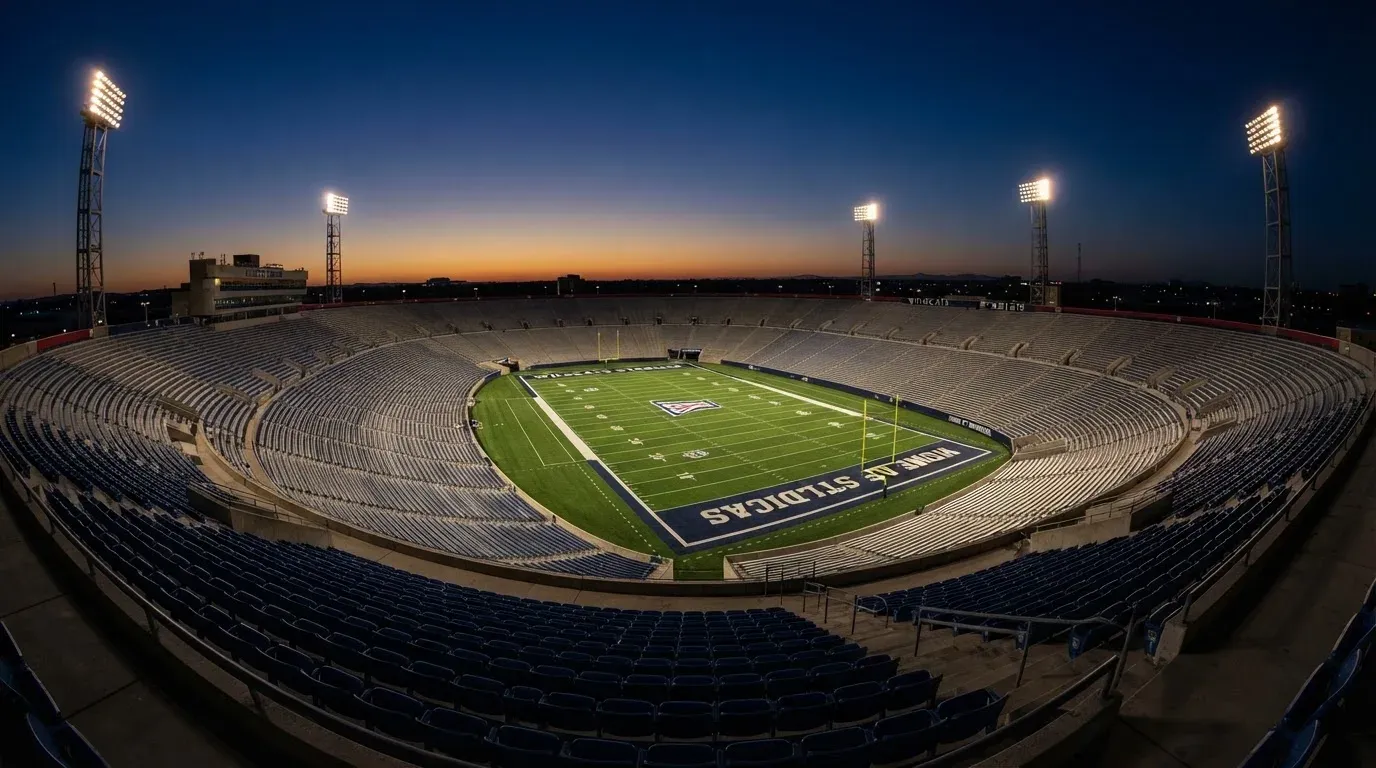
The 2026 NFL season runs 32 teams over an 18-week schedule, with each franchise playing 17 regular-season games and sitting out one bye week. The regular season began on 9 September 2026 and runs to 10 January 2027; the playoffs open on 16 January 2027. The Conference Championships fall on 31 January 2027 and Super Bowl LXI closes the calendar at SoFi Stadium in Inglewood, California, on 14 February 2027 — the latest date an NFL Super Bowl has been played. The Seattle Seahawks enter as reigning champions after winning Super Bowl LX in February 2026. None of these dates is provisional and none shifts the schedule a reader needs to plan a bet around.
Fixtur and the Bracket That Decides Where the Money Goes
The NFL Wild Card Round puts three games per conference on the board on the first playoff weekend, with the top seed in each conference drawing the lowest remaining seed in the Divisional Round. Conference Championships narrow to two teams; the Super Bowl is the only game left. Bettors who treat the bracket as a futures market — picking a team to win Super Bowl LXI before the season starts — are buying a price that compounds the margin of every game between now and February, and is as a result wider than the margin on any single game they will bet on later. The same trade-off applies to division winners, conference champions and season win totals, each of which sits on TAB NZ’s outright markets throughout the regular season.
What This Means for When to Bet
The longer the horizon of a futures bet, the wider the margin and the longer the bettor’s money is committed. A Super Bowl futures bet placed in Week 1 is at risk for five months, and the price moves with every game; a same-game multi settled by halftime of the Sunday game commits the stake for about two hours. Both have a place, but they are not the same bet. A bettor who treats them as interchangeable ends up paying for five months of margin on something the price they wanted was available on within a week.
The Ten Operators on a New Zealand Bettor’s Shortlist
The Landscape of NFL Betting in New Zealand
The comparison below names what each operator is, whether it is lawfully allowed to take NFL bets from a person in New Zealand, and what the operator’s own terms say about its NFL offer. The first two rows are TAB NZ’s two online brands — a single operator with two faces — and the rest are overseas brands Kiwi readers meet in search results and on affiliate pages. The table is the shape of the market; the verdict on each one is in the prose that follows.
| Brand | New Zealand status | What the operator’s own terms state on NFL betting |
|---|---|---|
| TAB | TAB NZ’s retail and online brand; the only provider lawfully offering racing and sports betting to people in New Zealand (Racing Industry Act 2020, section 74AAA, in force since 28 June 2025) | Lists NFL outright, game line and total markets with same-game multis; pre-match and live betting available in the TAB NZ app |
| Betcha | TAB NZ’s online-only brand under the same statutory monopoly as TAB | Lists NFL among its covered sports alongside NRL, NBA and rugby; pre-match and live betting in the Betcha app |
| RoyalistPlay | Not licensed in New Zealand; names a Tobique Gaming Commission e-gaming licence (No. 0000002) which gives no right to take bets from people in New Zealand | Lists American football among its top sports, with separate live betting and sports-promotions sections |
| LegendPlay | Not licensed in New Zealand; names an Anjouan Gaming Authority licence, which gives no right to take bets from people in New Zealand | Sportsbook lists Sports, Live Betting and Virtual Sports sections; American football coverage not separately confirmed in its own terms |
| 22Bet | Not licensed in New Zealand; names a Curaçao licence (8048/JAZ) under TechSolutions Group N.V., which gives no right to take bets from people in New Zealand | Markets more than 30 bet types per event including 1X2, Double Chance, totals, both teams to score and correct score |
| Millioner | Not licensed in New Zealand; names no licence that applies in New Zealand | Sportsbook covers American football alongside football, tennis, basketball, ice hockey and baseball, with separate live and virtual sections |
| Spinbara | Not licensed in New Zealand; names no licence that applies in New Zealand | Lists a sports section alongside casino products; American football coverage not separately confirmed in its own terms |
| Glorion | Not licensed in New Zealand; names no licence that applies in New Zealand | Sportsbook lists pre-match, live, virtual, horse racing and esports; American football coverage not separately confirmed in its own terms |
| Rooster | Not licensed in New Zealand; names a Tobique Gaming Commission e-gaming licence (No. 0000002) which gives no right to take bets from people in New Zealand | Sportsbook offers live, sports promotions, results, schedule, e-sports and predictions, with odds shown in six formats |
| Thunderpick | Not licensed in New Zealand; names a Curaçao licence (OGL/2024/677/0722) under Paloma Media B.V., which gives no right to take bets from people in New Zealand | Esports-first brand with a sportsbook that runs a cash-out feature and lists NFL markets alongside Champions League football |
The two rows at the top are not rivals; they are the two faces of TAB NZ, run by Entain under a 25-year partnership signed in 2023 that splits gross profits 50/50 and commits at least $150m a year to TAB NZ for the first five years. The other eight rows are not alternatives in the legal sense — they are overseas brands Kiwi readers meet regardless, listed for transparency rather than as a comparison.
TAB
TAB is TAB NZ’s main brand and the only operator in New Zealand whose right to take NFL bets comes from statute rather than from a licence a regulator can revoke. Its sportsbook carries NFL outright, game line and total markets, with same-game multis on the bigger Sunday and Monday fixtures. Live betting is available in the TAB NZ app, alongside fixed-odds racing products that go back to the brand’s tote origins. Deposits and withdrawals run through the same wallet as racing, with bank transfer, card and the operator’s own prepaid channels listed in its terms. A New Zealand verified address and ID are required to open an account; the age for betting is 18.
For a bettor who wants the regulator on the other end of the line, a complaints route inside New Zealand, and harm-minimisation tools that work in the same jurisdiction as the operator, TAB is the only option that offers all three. The price it offers is rarely the sharpest in the world, but it is the price inside a legal envelope that gives a player somewhere to complain.
Betcha
Betcha is TAB NZ’s online-only sibling, built and run by Entain New Zealand Limited and first released as a New Zealand App Store listing on 6 August 2024. It carries the same statutory basis as TAB — the two brands are one operator — and offers the same fixed-odds racing and sports product under a younger product wrapper. The app covers horse, greyhound and harness racing, rugby union and league, NRL, NBA, NFL, MMA and UFC, tennis, cricket, football, motorsports and esports. As with TAB, account opening requires a New Zealand address and verified ID, and the age threshold is 18.
For a bettor who wants the same legal envelope as TAB but in a mobile-first product, Betcha is the same operator behind a different interface. A punt placed with Betcha and a punt placed with TAB share the same customer account framework, the same self-exclusion list and the same Problem Gambling Levy contribution.
RoyalistPlay
RoyalistPlay’s sportsbook lists American football among its top sports alongside football, basketball, tennis, handball, ice hockey, volleyball and table tennis, with separate live betting, sports-promotions, results and schedule sections, plus e-sports and a Predictions section. Its licence is a Tobique Gaming Commission e-gaming licence (No. 0000002), held by Novatrix SRL, which gives no right to take bets from people in New Zealand. The brand names no New Zealand complaints route, no New Zealand harm-minimisation framework and no obligation that runs back to the Department of Internal Affairs.
For a New Zealand bettor, RoyalistPlay is an overseas product with an NFL offering. DIA’s stated risks on offshore operators — minimal consumer safeguards, possible non-return of unspent credits, possible non-payment of large wins — apply. Anyone opening an account here is outside the regime the Racing Industry Act 2020 sets up.
LegendPlay
LegendPlay’s sportsbook runs Sports, Live Betting and Virtual Sports sections, with football, tennis, basketball and ice hockey listed on its home page. Its licence is an Anjouan Gaming Authority licence, which gives no right to take bets from people in New Zealand. American football coverage is not separately confirmed in the brand’s own terms, so a bettor looking for the NFL here has to verify the market exists on the site rather than assume it from the homepage.
For a New Zealand bettor, LegendPlay sits in the same offshore category as the rest of this list. The licence named on its terms is one of the lighter regulatory frames in the offshore market, and the regulatory protection a player has is whatever that licence requires the operator to do.
22Bet
22Bet’s sportsbook is the broadest on this list by the metric of market types: more than 30 per event, including 1X2, Double Chance, totals, both teams to score, correct score and HT-FT, plus tennis game, set and handicap markets. Its licence is a Curaçao licence (8048/JAZ) under TechSolutions Group N.V., which gives no right to take bets from people in New Zealand. The Curaçao frame is a long-running offshore licence but it is not a New Zealand licence and does not create any New Zealand-based complaints route.
For a bettor who has shopped overseas books before and knows how to handle an offshore account, 22Bet’s breadth is the product. For a New Zealand bettor who has not, it is the same overseas product as every other row below TAB and Betcha, with no legal standing inside the jurisdiction they live in.
Millioner
Millioner’s sportsbook offers pre-match and live betting on football, tennis, table tennis, basketball, ice hockey, American football and baseball, with separate Live Betting and Virtual Sports sections. The brand names no licence at all on its terms, which puts it in a weaker position than the rest of this list: a bettor is relying on whatever undisclosed arrangement the operator has rather than on a named regulator.
For a New Zealand bettor, Millioner is the row that most clearly falls outside any visible framework. The absence of a named licence is itself the verdict.
Spinbara
Spinbara’s English-language site advertises a first-deposit bonus of 100% up to EUR 100 and a sport crypto welcome bonus of 100% up to 200 USDT, alongside a casino welcome bonus of 100% up to EUR 500 plus 200 free spins. The sportsbook is part of a casino-heavy product. The brand names no licence that applies in New Zealand. American football coverage is not separately confirmed in its own terms.
For a New Zealand bettor, Spinbara is an overseas casino with a sportsbook attached. The bonus headline reads large; what it costs in turnover, in minimum price and in time is the question that matters, and that question is settled by the brand’s own terms rather than by any New Zealand rule.
Glorion
Glorion’s sportsbook groups markets into popular, niche, indoor and outdoor sports, plus entertainment events such as award shows and elections. The brand names no licence that applies in New Zealand. American football coverage is not separately confirmed in its own terms.
For a New Zealand bettor, Glorion is another overseas sportsbook, with the same caveat that the regulation is overseas and the harm-minimisation framework is whatever the operator chooses to provide.
Rooster.bet
Rooster.bet’s sportsbook lists live betting, sports promotions, results, schedule, e-sports and predictions, with odds shown in six formats. Its licence is a Tobique Gaming Commission e-gaming licence (No. 0000002) under Novatrix SRL, the same licence RoyalistPlay holds, which gives no right to take bets from people in New Zealand.
For a New Zealand bettor, Rooster.bet is the same regulatory profile as RoyalistPlay. The Tobique Commission is an e-gaming framework, not a sports-betting licence, and it does not reach the New Zealand consumer.
Thunderpick
Thunderpick is the esports-first brand on this list, covering CS2, League of Legends, Dota 2 and Valorant, with a sportsbook that runs a cash-out feature and lists markets from the Champions League to the NFL. Its licence is a Curaçao licence (OGL/2024/677/0722) under Paloma Media B.V., which gives no right to take bets from people in New Zealand.
For a New Zealand bettor who already bets on esports and wants a sportsbook bolted onto the same account, Thunderpick is the option here. For a bettor whose interest is the NFL, the matchup with TAB is one-sided: TAB’s product is NFL-shaped, Thunderpick’s product is esports-shaped.
The Core of NFL Betting in New Zealand: What the Choice Actually Is
The Overview That Decides Everything Else
The single most important fact about NFL betting in New Zealand is the one this page has already laid out: TAB NZ’s two brands are the only lawful option. Every other choice on the table is the bettor’s decision to step outside the law the operator side is breaking. That is not a moral judgement; it is the legal frame. The Department of Internal Affairs reads section 74AAA of the Racing Industry Act 2020 as covering the promotion and taking of bets from people in New Zealand by anyone other than TAB NZ, and DIA told unlicensed providers to withdraw with immediate effect when the change took effect on 28 June 2025. The Online Casino Gambling Act 2026, which licenses online casino gambling and does not license sports betting, leaves the betting monopoly intact.
What this means in practice: a New Zealand bettor who uses TAB or Betcha has a New Zealand regulator, a New Zealand complaints route, an exclusion framework, the New Zealand Gambling Helpline (0800 654 655, text 8006) and Safer Gambling Aotearoa, deposit limits and self-exclusion set in New Zealand, a Problem Gambling Levy contribution from the operator, and a 25-year partnership with Entain that runs the product under the same monopoly. A New Zealand bettor who uses an offshore brand has none of those, plus DIA’s stated warning that offshore operators may have minimal consumer safeguards, may not return unspent credits and may not pay out large wins. The Offshore Casino Gambling Act’s online gambling duty on overseas operators supplying New Zealand residents — 12% of profits since 1 July 2024, 16% from 1 January 2027 — does not legalise an offer; a duty being payable is not the same as a licence.
The Statute Behind the Monopoly
The Section That Decides the Market
Section 74AAA of the Racing Industry Act 2020, inserted by the Racing Industry Amendment Act 2025 and in force since 28 June 2025, says that no person other than TAB NZ may offer racing betting, sports betting or other racing or sports betting to a person in New Zealand, regardless of where that person is resident or incorporated. The change did not merely clarify an existing rule; it closed a market the Department of Internal Affairs had been warning operators about for years. When the section came into force, DIA told providers serving New Zealand to withdraw with immediate effect.

There is no licensing route for another bookmaker because there is only one lawful provider, and no licence register for betting. A licence register exists for casinos, and the Online Casino Gambling Act 2026 sets one up for online casinos; that register is for online casino gambling, not for sports betting, and TAB New Zealand’s right to apply for a casino licence does not extend the betting monopoly. Greyhound racing is closing in stages from 1 August 2026, and from that date offshore operators may not take bets on greyhound races either.
What the Law Says About the Bettor
The Racing Industry Act 2020 makes it an offence to bet under 18 (section 89), and the gambling age for casinos is 20 — the two ages must not be merged. Section 19(4) of the Gambling Act 2003, inserted in 2025, says an individual may not be convicted for placing a bet with an offshore betting operator in breach of section 74AAA; no published penalty for a player was found. New Zealand law targets the operator; what it asks the bettor to weigh is the protection they give up by stepping outside the regime.
Tax, Advertising and the Edge of the Frame
Inland Revenue guidance says recreational gambling winnings are generally not taxable, and prize money from TAB horse, dog and trotting races is not taxable; a person who bets as a business is a different case and the right advice is Inland Revenue or an accountant. On the operator side, TAB NZ pays the Problem Gambling Levy (0.74%, in force from 1 July 2025 to 30 June 2028); overseas operators supplying New Zealand residents pay online gambling duty (12% of profits since 1 July 2024, 16% from 1 January 2027). The point-of-consumption charge on offshore racing and sports bets ceased on 30 June 2026. None of these duties and levies legalises an offer; they are how the operator side is taxed, not how the offer is authorised.
Advertising for betting in New Zealand runs under the Advertising Standards Authority’s Gambling Advertising Code: ads must not target children (under 14) or young people (14 to under 18), judged by context, appeal and expected audience (a 25% or more share of the audience counts as significant where accurate data exists), must not encourage harm and must be truthful with terms available. No New Zealand equivalent of a “whistle-to-whistle” advertising ban for betting was found.
Responsible Gambling and the Tools That Travel With the Bet
The Safeguards That Come With the TAB NZ Account
TAB NZ lists deposit limits, time-outs and self-exclusion in its app, and the free Gambling Helpline (0800 654 655, text 8006) is published inside the app. Self-exclusion applies across both TAB NZ brands: an exclusion taken out on TAB carries to Betcha, and the reverse. The minimum age for a TAB NZ account is 18, and the age rating on the New Zealand App Store listing is 17+ with a stated 18-or-over condition for betting. Account opening requires a verified New Zealand address and ID. The Problem Gambling Levy the operator pays funds harm-minimisation work; Safer Gambling Aotearoa is the public-facing service that work supports.
The practical shape of these safeguards is small but real. A bettor who sets a deposit limit at TAB NZ sees the limit enforced before the deposit clears, not after the betting has run; a self-exclusion closes both brands for the period selected and the operator’s own terms prevent re-opening as that period runs. None of these tools are perfect, and harm-minimisation is not the same as harm prevention, but they are the tools that operate inside the legal envelope the law sets up.
What the Offshore Row Does Not Carry
None of the eight overseas brands on this list has a New Zealand harm-minimisation framework that applies to a New Zealand resident. The Offshore Casino Gambling Act’s online gambling duty on overseas operators is a tax on the operator, not a New Zealand protective regime. A bettor using one of those brands is relying on the brand’s own terms and on whatever regulator the brand’s licence names, which on this list ranges from Curaçao and Anjouan to the Tobique Gaming Commission’s e-gaming framework. The Department of Internal Affairs’ warning about minimal consumer safeguards, possible non-return of unspent credits and possible non-payment of large wins is the floor of what an offshore account carries.
Mobile, App and the Hand the Bettor Plays
The TAB NZ App
TAB NZ publishes its app “TAB – Racing & Sports Betting” on the New Zealand App Store under the seller name New Zealand Racing Board, with the app first released on 8 September 2014. The app covers horse and harness racing, rugby union and rugby league and other sports, pre-match and live. It carries Trackside live race streaming with in-app betting, racing form, Blackbook and Jockey Challenge tools, and a simplified wallet for deposits and withdrawals. The age rating is 17+ on the App Store, with the operator’s stated 18-or-over betting condition. The Betcha app, run by Entain New Zealand Limited, sits in the same statutory frame as TAB and was first released on 6 August 2024.
For a Kiwi bettor whose betting is mobile-first, the TAB NZ app is the only option that puts the regulator, the deposit framework and the self-exclusion on the same handset as the betting slip. The trade-off is the product: TAB NZ’s mobile experience is built on a tote and fixed-odds racing heritage and does not have the casino-style surface area of some overseas sportsbooks, but the NFL product is there and the multi-builder is functional.
The Offshore Apps
The eight offshore brands each offer a mobile product, ranging from a fully featured native app (Thunderpick, Rooster.bet) to a responsive mobile site that runs in a browser. The mobile product on those brands is generally sharper than TAB NZ’s on raw feature count, but the same caveats apply: no New Zealand regulator, no New Zealand harm-minimisation tools, no New Zealand complaints route. A bettor who is comparing on feature alone is comparing the wrong product; the right comparison is feature against protection.
Predictions, Strategy and the Honest Frame Around Both
The Forecast the Bettor Cannot Buy
No service predicts NFL outcomes reliably. The lines set by serious bookmakers are themselves the product of every market participant’s collective estimate, and the bettor’s edge comes from reading the game more accurately than the line, not from following a tipster. Tipsters and prediction sites exist; what they sell is entertainment with a thin layer of analysis, and the only honest framing of their output is that a tipster who can pick winners at the rate they claim will not be selling tips.
This page does not name a “best bet” or a “sure thing” because nobody can know an outcome. A reader who acts on a named prediction is gambling on the predictor, not on the game. The strategy work that actually pays off is duller than that: bankroll discipline (a fixed unit size, no chasing, no raising stakes on tilt), line shopping (the same game at different prices on different books, with the better price taken), and a clear exit when the betting stops being a decision and starts being a habit.
Bankroll, Forecast and the Question the Bettor Owns
Bankroll is the dollar figure the bettor sets aside for betting and which they are prepared to lose. A unit is the fraction of bankroll risked on a single bet — 1% to 3% is the band most serious bettors use, with smaller units on player props where variance is wider. Forecasts are guesses; bankroll is the part of the process the bettor controls. The strategy that improves the result is the strategy that limits the damage a wrong read can do, and that is bankroll discipline, not a better tip.
The decision a New Zealand bettor owns at the end of this page is the one the previous sections put on the table: TAB NZ or Betcha inside the New Zealand envelope, or one of the eight offshore brands outside it. Each path has a price the other does not. The page’s job was to lay out what each one costs; the call is the bettor’s.
Frequently Asked Questions About NFL Betting in New Zealand
How does an NFL betting line work?
An NFL betting line is the spread (handicap) the bookmaker sets on a game, written as something like Patriots −3.5 against the Dolphins. A bet on the favourite covers if the favourite wins by more than the line; a bet on the underdog covers if the underdog loses by less than the line or wins outright. The line moves before kickoff as money lands on each side, and the half-point avoids pushes on whole numbers.
How do you bet on an NFL game?
Open an account with a New Zealand-licensed operator (TAB or Betcha) or with an offshore brand, deposit funds, navigate to the NFL section, choose a market — moneyline, spread, total, player prop or same-game multi — and add the selection to the bet slip. Set the stake, confirm the bet, and wait for the game to settle. TAB NZ and Betcha require a verified New Zealand address and ID and an age of 18 or over.
How is the return on a bet worked out from the stake and the odds?
Return equals stake multiplied by the decimal odds; a $10 stake at odds of $1.90 returns $19, of which $9 is profit. A combination bet works the same way at one remove: each leg’s odds multiply into one combined price, and the stake rides on all of them — a three-leg multi at $1.90, $1.80 and $2.10 carries combined odds of about $7.18, returning roughly $71.80 on a $10 stake if every leg wins.
Which bookmaker may lawfully take sports and racing bets in New Zealand?
Since 28 June 2025, only TAB NZ may lawfully take racing and sports bets from a person in New Zealand, under section 74AAA of the Racing Industry Act 2020. TAB NZ operates two online brands — TAB and Betcha — run by Entain under a 25-year partnership signed in 2023. There is no licence register for bookmakers because there is only this one lawful provider, and the Department of Internal Affairs has told unlicensed operators serving New Zealand to withdraw.
What is the bookmaker’s margin and how can it be seen in the odds?
The bookmaker’s margin is the share of every dollar staked the bookmaker keeps on a market, and it is hidden inside the prices. A two-way market priced at decimal odds of $1.90 and $1.90 implies a payout share of about 95.0%, leaving a margin in the 5.0% band — the result of 1 divided by the sum of the inverse odds. Real NFL lines drift between roughly 3% on the most-bet moneylines and 6% or more on player props; the tighter the margin, the more of every dollar staked returns to bettors over time.
The Hardest Question: Why Choose an Offshore Brand?
The reasons people do, despite the legal frame, are not mysterious: price, market depth, prop variety and the live-betting product are often sharper offshore, and an account at an overseas book lets a bettor shop a line against TAB NZ’s line in ways a monopoly does not allow. Those are real reasons, and they are the reasons a comparison piece cannot pretend they don’t exist. The reason this page still lays out the legal frame first is that “a sharper line” and “no consumer protection when something goes wrong” describe the same product from two ends, and a bettor making the call needs both ends in front of them.
The truthful framing is the one the Department of Internal Affairs itself uses: TAB NZ and Betcha are the only lawful option, with New Zealand harm-minimisation tools, regulator oversight and a complaints framework; offshore brands are unlawful for the operator to serve New Zealand, with no New Zealand complaints route and DIA’s stated risks. Neither is the safe choice by default; the safe choice is the one that matches the bettor’s tolerance on the legal and protective side as well as on the price.
US sports – footballbetsnz
Content created by the «footballbetsnz» team
